
It’s been nearly three decades since the U.S. Forest Service released their first management plan for the Tongass National Forest.
During a presentation at the Juneau Economic Development Council’s Innovation Summit last week, Southeast Alaska’s Deputy Forester Chad VanOrmer said it’s time for an update. The development of a new Tongass forest plan will inform the agency’s management decisions for the next 15 to 20 years.
“The Forest Plan is really kind of a compass, is how I like to look at it,” VanOrmer said. “It gives a direction on our desired future outcomes.”
The existing management plan was developed in 1997. Since then, there have been some amendments concerning timber management and the transition from old growth to young growth logging. But otherwise, the original plan has remained largely untouched.
In many ways, it fails to keep up with the modern-day opportunities and challenges in the Tongass.
For instance, when VanOrmer started his Forest Service career on Prince of Wales Island — just a few years after the original 1997 plan came out — there were only about 500,000 cruise ship passengers visiting the Tongass region annually.
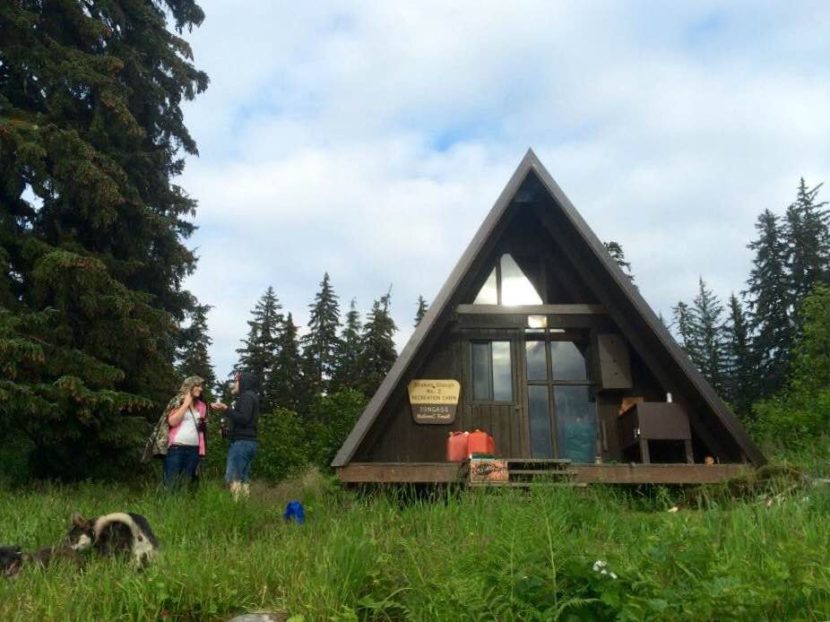
“I call it the ‘Field of Dreams,’ because we were doing a lot of ‘build it and they will come,’” he said. “So we were investing a lot of money in building trails and cabins and all sorts of recreation infrastructure for a tourism and recreation industry that was yet to actually arrive.”
Now the tourism boom has arrived in full force, with 1.7 million cruise ship visitors last year. And the number of tour guiding businesses in the forest has more than doubled, from 68 in 2000 to at least 177 today.
Time has also revealed new threats that will shape the Tongass and the communities that rely on it. VanOrmer said climate resilience planning will be a priority in the new plan.
“In 1997, climate change wasn’t even a thought in the forest plan – it wasn’t even really contemplated,” he said. “And here we are today where it’s really frontline, headline news and we have a forest plan currently that doesn’t really prepare ourselves for it.”
To make a plan that works for the present day, the agency wants to strengthen relationships with community organizers and tribal governments.
VanOrmer said the introduction of the Southeast Sustainability Strategy in 2021 set a precedent for that by sending millions in funding to tribal and Indigenous organizations for sustainable development projects — things like forest restoration, trail work and Indigenous cultural education projects.
A lot of that work has already begun.
“We have multiple crews that are working, doing stewardship on the landscape. But they aren’t Forest Service crews,” VanOrmer said. “They’re local tribal crews, they’re other youth crews, they are other scientists coming to the table and really wanting to roll up their sleeves and expand the capacity and scope and breadth of the work here on the National Forest. “
VanOrmer said the new Tongass Forest Management Plan will set the foundation up for more projects like that.
The Forest Service will spend the next year hosting workshops around Southeast Alaska to gather input on the next version of the plan. It will likely take two to three more years to develop a final version.