
The bottom of the Bering and Chukchi seas could become too warm for some important species, the Alaska Beacon’s @YJRosen reports: https://t.co/noG8fdGxoL
— Alaska Beacon (@AlaskaBeacon) November 30, 2022
According to a new study by National Oceanic and Atmospheric Administration researchers, there is danger on the Bering and Chukchi ocean floors for mussels and snails, as well as worms and other cold water invertebrates.
If climate change continues on its current path, the Bering-Chukchi seafloor areas could become too warm for these creatures by the end century.
That can lead to problems for walruses as well as other marine species. Commercially harvested fish such as yellowfin sole and halibut depend on mussels and snails. They also provide food for the Pacific walruses who gather in the summer in northern Bering and south Chukchi oceans. The Bering Sea is located in the North Pacific Ocean, south of the Bering Strait which separates Alaska and Russia. The Chukchi Sea is located just north of that strait.
The study found that future ocean warming could have a serious impact on seafloor invertebrates that are essential for the survival of Bering Sea and Chukchi Sea marine mammal populations. The study also stated that coastal residents, who depend on traditional seabird and walrus harvests for their food and cultural connections, could be affected by future ocean warming.
According to the study, key cold-water bottom-dwelling predator species that rely on the ocean for their habitat are likely to lose half of it by the middle of the century due to the current climate trend. The study concluded that by the end of this century, nearly the entire Bering-Chukchi sea region would have become too warm to support them on the seafloor.
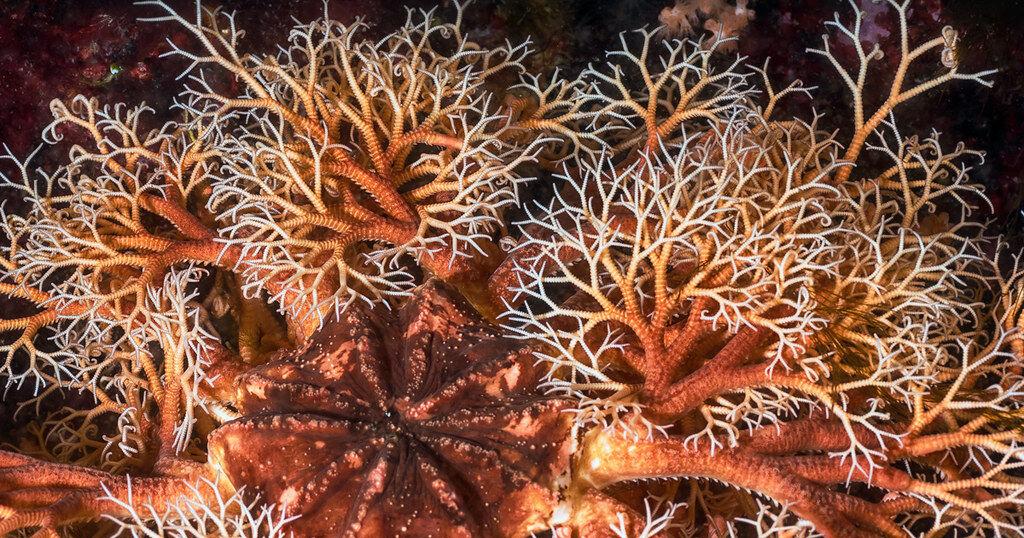
The seafloor habitat that would result from this change would be occupied by a few species which can tolerate extreme temperatures, such as brittle stars or basket stars, who are relatives to sea stars. These marine species are minor players in the food web.
This study was a collaborative effort of NOAA’s Alaska Fisheries Science Center scientists, NOAA’s Pacific Marine Environmental Laboratory scientists, the University of Washington, and the Institute of Marine Research Norway.
It analyzes a decade of data to determine the ideal temperatures for various species that live at the bottom of seawater in areas of Chukchi and Bering that have seasonal ice.
In the past, this data was used to study the populations of crabs and fish that are crucial to the commercial seafood industry. However, the new study used that data to explore the future prospects of sometimes overlooked bottom-dwelling species. This makes it the first study of climate-change effects on all invertebrates that live on the seafloor, according to Libby Logerwell, NOAA’s Alaska Fisheries Science Center.
For most of them, and for those species that depend on them for their food, the prospects are grim.
Logerwell stated by email that climate models that are based on this “business-as usual” climate change scenario project that there will be a dramatic decrease in the thermal habitat of all but the most heat-tolerant arctic Invertebrates by the end century.
According to the study, only 8% of animal groups are currently affected by the species that would be beneficial.
Logerwell stated that the study does not project into the future and therefore its findings cannot explain the recent crash in Bering Sea crab stock stocks. She said that the Bering still has a large amount of “thermal habitat” to support crab. If climate change continues at its current pace, however, the long-term prospects are not good. She said that habitat with suitable temperatures for crab species will likely move further north.
The study was published by Deep Sea Research Part II Topical Studies In Oceanography.