
Holidays are approaching and, just like every year, there will be a new gift trend or fad. Stacker has researched the fads and crazes from 1919 to today in order to celebrate.
This information is derived from the National Toy Hall of Fame’s toys list and Toy of the year awards. It also includes inventions that were immediately popular and lists of the 100 greatest toys. These gifts are recommended for children between the ages of 2 and 4. A few items can be used for adults. This list shows a snapshot of the trends that have occurred over the past century. It includes everything from electronics to building bricks.
You might be familiar with Mr. Potato Head that is a familiar character from “Toy Story”, but did you also know that miniature soldiers were created in the 1930s? And that the potato-inspired toy was first advertised on TV around 15 years later? How about the 1980s with the introduction of Transformers, Koosh balls, and Nintendo? These gifts have lasted for a long time. Despite the recent technological advances and complex designs for holiday crazes such as Xbox, iPad and drones, many people still want the joy and utility of simple gifts like Legos, Polaroid cameras and Wiffle balls.
You can scroll down the list to get some inspiration, whether you are looking to relive the past, learn about the fashion trends of older generations, or simply refresh your knowledge on the latest trends for the younger members of your family.
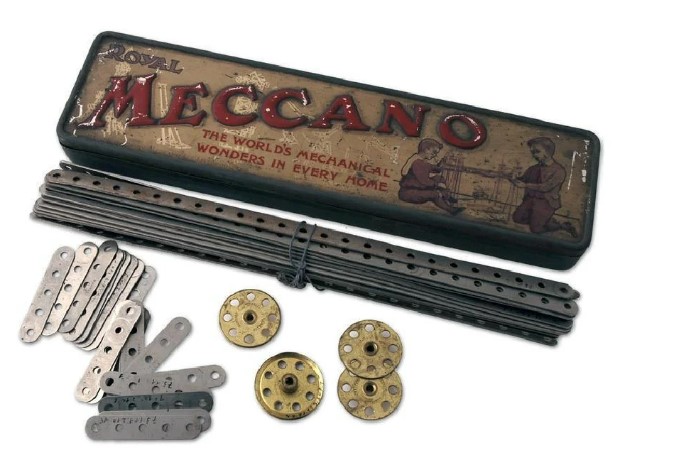
1919: Meccano sets
Frank Hornby, a British inventor of the Erector Set, first produced this predecessor in the early 1900s. To encourage boys of all ages, up to adulthood, to get together and build, Hornby founded the Meccano Guild in 1919.
1920: Raggedy Andy
Raggedy Ann was given a brother in 1920. Johnny Gruelle, a cartoonist and illustrator, began publishing the Raggedy Andy Story to compliment Raggedy Ann. A Andy doll was also published. They were bought by adults to give their children a matching Ann-and-Andy set.
1921: Chanel No. 5
Chanel No. 5 was a game-changer in elite circles of women. The invention of Chanel No. 5 was a game changer in elite circles. They could now smell clean and fresh all day thanks to Coco Chanel’s assistant, who accidentally gave the mixture a higher chemical dosage. It was immediately promoted by Chanel, and the product was removed from the shelves after the holidays.
1922: Pogo stick
The pogo stick , which was created in 1919 in Russia by George B. Hansburg in 1922 , was a popular outdoor toy among children and adults. was prominently featured in newspaper ads and magazine .
1923: Chemistry set
A.C. Gilbert, the inventor of the Erector Set, flexed his edutainment muscles again and created a toy chemistry specializing in boys. The set was immediately popular because of the desire to provide promising careers for their children by parents who were dealing with the Great Depression. Although most of the components were safe, there were some elements that raised eyebrows. For example, a glassblowing kit with a blowtorch was included in future iterations.
1924: Flossie Flirt Doll
The Ideal Company created Flossie Flirt, which was launched in time for Christmas in 1924. The doll played with her eyes, darting from one side to the other, blinking, winking and squinting. Flossie Flirt was so well-received that newspapers printed “Doll Lady” schedules that listed where and when the doll’s dealers would be available.
1925: Set of electric trains
In 1925, electric train sets took control of the market from three companies: Hornby, American Flyer and Lionel. Although the trains were costly, one set was about a month’s salary.
1926: Winnie-the-Pooh
The bear was well-known by the time that “Winnie-the-Pooh”, a collection of poems and stories published in 1926, was published. Winnie and his friends were inspired to create Winnie by the stuffed toys Christopher Robin’s son received between 1920 and 1928. This stuffed crew can be found at New York Public Library, 42nd Street.
1927: Brownie camera
The Brownie camera, in 1900 by Kodak was first released. It was a non-prohibitive cost that allowed the public to enjoy photography as a hobby.
1928: Doubble Bubble
Everyone wanted Doubble Bubble in the candy world during the 1928 holiday season. The gum was accidentally created by Walter Diemer, Fleer Chewing Gum Company. It was more flexible, less sticky and more susceptible to bubbles than regular chewing sugar gum. In one hour, the first batch of five-pounds was gone.
1929: Yo-yo
Although no one knows when the yo yo was first invented, Pedro Flores from the Philippines started selling and carving them. From his childhood, yo-yos were a favorite toy. To keep up with the demand, he owned two factories in Los Angeles by 1929 and one in Santa Barbara by 1929.
1930: Mickey Mouse
In 1930, Disney commissioned the first Mickey Mouse stuffed doll. was created by Charlotte Clark. The dolls became instantly popular after Mickey was already around for two more years.
1931: Radio Flyer Wagon
The American Flyer wagon was produced by Liberty Coaster Company, Chicago. It is the original Radio Flyer wagon. In 1930, the company was renamed Radio Steel and Manufacturing and the wagon name was changed to reflect this change. The company began making 1,500 wagons per day by 1930 to supply the nation’s gift craze.
1932: Sock monkey
The Nelson Knitting Co., a Rockford-based Illinois company, started producing the distinctive red-heeled socks in 1932. Due to the Depression, money was often scarce. Mothers would make monkey toys from the socks they had worn out. Soon, every pair of socks came with a sock monkey design.
1933: Sears Wish Book
This was not a toy, but a catalog of toys. The Sears Christmas Book was a standard for holiday shopping and included everything you could need to gift someone. It was only 87 pages when it first appeared in 1933. By 1968, it had grown to 608 pages.
1934: Buck Rogers Ray Gun
was the debut of “Buck Rogers in 25th Century A.D.” The first science-fiction comic strip, , in January 1929 . It began as a daily comic strip. In 1930 it was made into a color Sunday edition and in 1932, became a radio program. The first Buck Rogers replica toy gun was launched in 1934. It sold for 50cs and produced a “popping” sound when it was fired.
1935: Caned beer
The first can of canned beer was released in Richmond, Virginia by Gottfried Krueger Brewery. It was so popular, 37 additional breweries began selling canned beer by the end the year. More than 200 million cans were sold.
1936: Monopoly
Parker Brothers began selling Monopoly in 1935. However, the original idea for the game was stolen. The game’s creator Lizzie Magie criticized the theft in The Washington Post on Jan. 28, 1936. This only served to further promote the game.
1937: Pedal Cars
Between 1920 and 1940, pedal cars enjoyed a seemingly endless heyday. The changing auto industry meant that pedal cars were designed to match the evolving full-size automobile industry. Some catalogs contained to 30 models of pedal cars.
1938: Action Comics
The origins of superheroes in pop culture can be traced back to Action Comics #1, which introduced Superman in 1938. It was only 200,000 copies printed that first year. However, it was so popular that the creators obtained a spinoff of their comic.
1939: Little green army men
These tiny plastic toy soldiers were created for the first time in 1938. The popularity of these toys exploded in the wake of World War II in 1939. They can be found in many poses today, including yoga.
1940: Bubbles
Blowing soap bubbles was not invented until 1940. The practice was popularized by , a Chicago company that started to bottle its own soap solution.
1941: The comic book ‘Captain America’
Captain America made his first appearance in comic books four years before World War II was over. The comic was a controversial which helped to increase sales.
1942: Little Golden Books
Books for children were expensive and of poor quality before 1942. Little Golden Books made this a reality , selling for just a quarter in accessible locations. In the first year, there were hundreds of thousands. By February, the following year, over 1.5 million copies had been sold.
1943: Chutes & Ladders
Milton Bradley introduced Chutes and Ladders in 1943. It was based upon an English game from India called Snakes and Ladders. It was a huge success immediately and has remained popular for many generations.
1944: Dick Tracy Detective Kit
Dick Tracy was first seen in 1931. However, he gained popularity in 1944 due to the revival of the radio program the year before. The hot toy this year was the Dick Tracy Detective Kit. It included a manual, suspect information and a badge.
1945: Slinky
Another year, another accidental toy. Richard James, a mechanical engineer was making springs when he saw the toy walk down the shelf. Although the Slinky was not immediately popular at its release, it became extremely popular after a 1945 Christmastime demonstration by the toy in a Philadelphia department shop.
1946: Tupperware
Tupperware bowls were a hit with mothers and wives all over the world. They were durable, airtight, and watertight. With the increase in home refrigerators they made storage easy.
1947: Electric football
Electric football is not a game of skill, unless you consider the patience required to ignore the terrible buzzing noise of players moving across a vibrating field of football a skill. This toy was popular for Christmas morning play.
1948: Tinymite Radio
The first radios to pick up a signal from broadcasting stations, and play it through amplifiers, were crystal radios. These radios were very popular in the ’20s, ’30s, but they eventually died out. The Tinymite Radio , which was first manufactured in 1948, became instantly popular.
1949: Silly Puutty
Silly Putty was accidentally invented in 1943 by an engineer who tried to create synthetic rubber. It was never used, but Ruth Fallgatter, a toy store owner decided to make a catalog with it. It was a huge seller that year.
1950: Magic 8 Ball
It wasn’t a pool ball, but a tube made by a psychic’s child was what gave rise to the fortune-telling pool balls we all love. Abe Bookman, a brother-in-law of a Cincinnati shop owner, took the invention and made it into a crystal ball. Brunswick Billiards, a Cincinnati shop owner, wanted to give the item away and made it into an eight-ball. It was immediately popular. In 2018, the toy was inducted in the National Toy Hall of Fame.
1951: View-Master
The original purpose of the View-Master was to allow you to view scenic photographs from all over the globe. It was introduced at the New York World’s Fair in 1939. Although it became marginally more popular, sales soared when discs began showing images from Disney movies in 1951.
1952: Mr. Potato Head
The first Mr. There was no body when the first Mr. It was a bring-your-own-potato toy of wacky face components. It was the first toy to actually have a commercial . This helped it to make over $4 million in sales within the first few months of its launch in 1952.
1953: Matchbox Cars
This tiny car is possible because has a bizarre rule at school. Jack Odell’s daughter could only bring toys that fit in a matchbox to school. Odell made the tiny die-cast cars and sent them to school. The cars were loved by all the students and Matchbox was officially launched in 1953.
1954: Wiffle ball and bat
David Mullany, the inventor of Wiffle Ball, was a father who wanted a safer way to allow his son to play baseball and not damage any neighbor’s . To create the original ball, he used old perfume packaging. Mullany filed a patent in 1954 and incorporated a company. He then began marketing the ball, which attracted Woolworth stores’ attention, eventually leading to its eventual success.
1955: Gumby
Art Clokey, an animator, introduced Gumby in a short film in 1953. The idea was so popular that Clokey got his own television show, The Gumby Show. Gumby toys were released in 1955, and enjoyed the same immediate success.
1956: PEZ
Although PEZ candy is a product of the 1920s, the dispensers were created in the 1950s. The space gun was introduced by PEZ in 1956. PEZ added a 3D head to its top in 1956, cementing its position in pop culture.
1957: Frisbee
The flying discs had existed for almost 90 years by the time Frisbees were first released in 1957. It began as a “frisbie,” an empty pie tin made by Frisbie Baking Company of Bridgeport, Connecticut. Wham-O was the first to create the iconic plastic disc.
1958: Hula Hoop
Another Wham-O was the hula hoola hoop. It was designed to capture the spirit of Chinese acrobats spinning hoops with their limbs. More than 25 million were sold within the first few months after the hoop was released in 1958.
1959: Barbie
The first Barbie was presented at the New York Toy Fair, 1959. It was met with skepticism by the public. The appeal of a fashion doll is not to be underestimated. 300,000 Barbies were sold the first year.
1960: Etch-A-Sketch
In 1959, the original Etch-A-Sketch was introduced at a Nuremberg toy fair. It wasn’t very popular when it was launched. It caught the attention of an Ohio business, who bought it and saturated televisions with advertisements for the toy. The toy became a Christmas must-have in 1960.
1961: Chatty Cathy
Chatty Cathy was powered by a record in her belly. She spoke eleven different phrases. In television commercials, she first appeared in 1960. By 1961, she was second to Barbie in popularity.
1962: Legos
The modern Lego block was created in 1958 after several iterations. It was still a static toy and it was popularized when the Lego Wheel was introduced in 1962.
1963: Easy Bake Oven
When Hasbro introduced the Easy-Bake Oven, in 1963, children could make cakes and brownies with a small lightbulb. The Easy-Bake Oven was launched just in time to celebrate Christmas and has been a popular choice for young bakers since.
1964: G.I. Joe
In the 1960s Barbie was the king of dolls and dominated sales. Stanley Weston, a New York marketing agent, created the G.I. to give boys that same joy. Hasbro bought the Joe action figure and began selling it in 1964. Over 16 million G.I. By the end of the first year, more than 16 million Joe action figures had been sold.
1965: Tonka Truck Dump Truck
Three Minnesotans invented the Tonka Truck. They originally wanted to make gardening tools, but began making toy trucks after they received a toy Steam Shovel. The dump truck was first released in 1965. It quickly became a bestseller and stayed there for 35 more years.
1966: Troll Dolls
Thomas Dam, a Danish woodworker, created the original troll dolls. They were far scarier than their modern counterparts. They were made from wood, had wool hair and glasses eyes. The dolls were made in a small factory that used PVC plastic by 1959. The popularity of the trolls grew and kept it for the next ten years. Teens collected them and hosted “bring your troll” parties.
1967: The Barrel of Monkeys
Barrel of Monkeys is a game that involves linking plastic monkeys in S-shaped shapes into a long chain. It was invented by Leonard Marks while he was waiting at a counter and playing with snow tire replacement chains links. Barrel of Monkeys ranked #2 in the hit toys charts by 1967.
1968: Hot Wheels
Hot Wheels was a direct competitor to Matchbox, but Matchbox was more concerned about size while Hot Wheels specialized in the design of its cars. The Sweet 16 was the first die-cast line to be released in 1968. It quickly outperformed all other competitors.
1969: Flatsy
Flatsy is a combination of a Barbie and a paper doll. It has hair, clothes and accessories. They were first released by Ideal Toy Company in 1969 and quickly became popular. The first year of flatsy dolls was a great year for collectors.
1970: NERF
Parker Brothers realized that children everywhere were sick of hearing they couldn’t play in their house. The company created a ball specifically for use inside. It was called NERF and it is a soft foam ball that won’t cause any harm if it hits it. More than 4 million of these balls were sold by the end the first year.
1971: Weebles
We all know the phrase “Weebles don’t fall down, they wobble!” The tiny, wobbling egg-shaped people were created in 1971. They are based on the Punching Clown from “Romper Room.” They were immediately popular.
1972: Polaroid Camera
In 1972, Polaroid, a well-established company, made a huge leap forward when it introduced the Polaroid instant cam. Legend has it that was the co-founder’s child. She wondered why vacation photos didn’t appear immediately after being taken. Life magazine’s cover story about the camera was published just before Christmas in that year to boost sales.
1973: Baby Alive
1973 was a big year for lifelike dolls . Baby Alive was launched in 1973 and quickly became a market leader. It was equipped with a mechanical mouth, which ate food from packets and then “disposed” of it in its diaper.
1974: Magna Doodle
A new type of chalkboard was created in 1974. It had no chalk and didn’t contain dust. It was very similar in appearance to the Etch A Sketch, but it was much more recent and has been sold millions of times since its introduction.
1975: Pet Rock
The Pet Rock was initially intended as a joke. It was a pet that didn’t need any care. This seemed to fit in perfectly with the self-indulgent mid-1970s. It was $3.95 and dominated the country in 1975 with more than one million units.
1976: Paddington Bear
In 1958, a children’s book introduced “A Bear Called Paddington” to the world. In the bear was shown in . A stuffed animal version of the bear followed in 1972 . The toy was approved for sale in the United States in 1975. The toy was a hit and it was adapted into a TV series in 1976.
1977: Slime
The first introduction of squishy, oozy slime was in 1976. It was packaged in a plastic trash can and quickly became a hit. The Slime Monster Game was a popular new way to play Slime. Players attempt to slime other players.
1978: Hungry Hungry Hippos
Hungry Hungry hippos was first released in 1978 to great acclaim. You act as a plastic hippos and try to eat all the marbles you can fast. The game is a classic in the family game area, and was a favorite of children born in the 1980s.
1979: Atari
Atari’s first home was in 1975, when the videogame craze began. Although 150,000 units were sold in the first year, the game only gained momentum after , the inventor of the system, sold it to Warner Communications. Sales reached $415 million by 1979.
1980: Rubik’s Cube
In 1974, a professor created the Rubik’s Cube in his mother’s Budapest home. It became a very popular puzzle cube in 1980 when it was introduced at the New York Toy Fair. It was instantly popular and sold over 100 million cubes in three years.
1981: Smurfs
Smurfs aired their first television program in September 1981. It was part a standard ’80s childhood.
1982: BMX Bikes
The BMX bike craze of the 1980s can be attributed to a boy and his alien. In 1982, featured off-road trick bikes. Kids all over the country wanted them.
1983: Cabbage Patch Kids
Cabbage Patch Kids was created in Georgia by a 21 year old folk artist. These dolls were available to “adopt” once they were “born.” Xavier Roberts was unable to keep up with the demand so he teamed up with Coleco in 1982 to mass-produce the dolls. They were released to the public in 1983. People were so eager to get one before Christmas, violent riots broke out in many stores
1984: Transformers
Both the toys and television series “Transformers”, were both released in 1984. Hasbro manufactured robot toys that could be transformed into cars, planes and cassette tapes. The toys became the most popular franchise in history, thanks to transformer fever.
1985: Teddy Ruxpin
Teddy Ruxpin was a stuffed bear that had a cassette tape on his back. He entered mass toy manufacturing in 1985. He was able to tell stories and move his eyes and mouth along with them. The bear was a huge success at Christmas, and it was still the top-selling Christmas gift for next year.
1986: Pound Puppies
Pound Puppies, like the Cabbage Patch Children, were toys that you could “adopt” and came in a cardboard box with a guide for caring for the pet. Their popularity grew when they were popular and sold out in 1985.
1987: Nintendo
The 1980s video game scene was revived by gamers thanks to Nintendo. Atari was out of fashion and nobody was buying video games systems from the time it was released. Super Mario Bros. was launched. Nobody knows when it went on sale in America, but it was there by 1987 and taking Nintendo to stardom.
1988: Koosh ball
In 1987, the Koosh Ball was introduced to the world. To help his children learn to play catch, the creator invented a ball that could be caught easily from rubber strands. There were 2,000 of these per ball. The Koosh Ball became a Christmas essential in 1988.
1989: Game Boy
In 1989, Nintendo released Game Boy (a handheld videogame system) to capitalize on the success of the original system. It was packaged with the puzzle game Tetris. It immediately became a huge success, selling 35,000,000 copies in its first year.
1990: TMNT Action figures
Everyone wanted to be a hero or have their own half-shell by 1990. The Teenage Mutant Ninja Turtle Movement was all over the country thanks a comic, a cartoon and action figures. The first movie was released in that year and toys began to fly off the shelves more quickly than ever before.
1991: Pogs
Since the 1600s , pogs have been in existence in some form. When the game was first popularized in Hawaii in early 1900s, the original discs were approximately the same size as milk caps. Blossom Galbiso, a schoolteacher, taught her students how she played the game in 1991. This sparked a huge craze throughout the country.
1992: Barney
Barney, the large, lovable, purple dinosaur, was first seen on a television show in April 1992. over 25,000 people had already flocked to events all across the country by November. They formed lines nearly a mile in length just to see the dino. The first year of Barney merchandise was a huge success.
1993: Talkboy
Fun fact: The original Talkboy was not a real thing. It was an nonfunctional prop in 1992’s “Home Alone 2”. However, fans wanted it and started a letter-writing campaign in order to get the cassette recorder with voice-changing cassette. It was a success and the functional Talkboy topped the toy charts in 1993.
1994: Power Rangers
The Mighty Morphin Power Rangers’ initial life span was quite short. In 1993, the show was launched. The show was launched in 1993. In 1994, the fans caused 8-mile-long traffic jams to get to know the characters. They also topped the holiday gift list. The movie was released a year later and the popularity of the Power Rangers quickly declined. However, that was only the beginning; by 2013, the Power Rangers had returned with a vengeance.
1995: Beanie Babies
The Beanie Baby toys craze exploded in 1995 when a Lovie stuffed lamb was discontinued. Ty Warner, the inventor of Beanie Baby, informed angry customers that the toy had been “retired” driving up demand. He started to randomly distribute Beanie Babies to various Beanie Babies, and saw their value grow. Rare Beanie Babies were sold by their owners to help finance braces or even to adopt a child.
1996: Tickle Me Elmo
In July 1996, Tickle Me Elmo was released. This doll made you laugh more when you tickle it. It didn’t sell very well initially, but Rosie O’Donnell showcased it on her October show. People were rushing to buy the dolls as they were sold out within minutes of each other during the holiday shopping season.
1997: Tamagotchi
Everyone wanted Tamagotchi in 1997. This portable pet that you can feed, play with and help grow was a popular choice. Your Tamagotchi will die if you forget to stop the game after a few hours. It was released in shortly after it was published. There were waitlists for those who wanted one.
1998: Furbies
Caleb Chung and David Hampton were inspired by Tamagochis. They created Furbies. The toy was in high demand and prices rose to over $100 by Christmas 1998.
1999: Pokemon Trading Cards
Trading cards have always made a lot of money. Pokemon cards, which are based on the capture and battle with adorable monsters, are no different. Pokemon cards were the most requested holiday gift in 1999. However, they were also the most controversial. In 1999, parents sued the company, claiming that the game gave their children gambling problems.
2000: Razor Scooter
In 2000 , the foldable Razor A scooter went on sale. It was quickly named Toys of the Year. The United States sold 7 million units in the following year. People of all ages still love scooters, even adults who use them to get around the city. However, nothing has ever been as popular as the original launch.
2001: Bratz
In 2001, Barbie was able to find worthy competition in Bratz Dolls, her rebellious descendants. Barbie dolls were fashionable and wore lots of glittery makeup. They also had large doe eyes. The dolls were sold in millions that year and there is now a Bratz empire.
2002: Beyblades
Beyblades were customized spinning battle tops that were created in Japan in 1999. They were then launched internationally in 2002. The accompanying television show, which began airing the previous year, helped them to become a huge success.
2003: Electronic Hulk Hands
Beyblades still dominated sales in 2003 but the Boy Toy of the Year award from the Toy Association knocked them down and placed Electronic Hulk hands at the top. When you hit the ground with these big green gloves, Hulk sounds were made.
2004: Robosapien
Since 1998’s Furby craze, robotics has advanced a lot. In 2004, Robosapien was introduced to the market. It was a robot that could communicate with you and do anything you asked. It was a hit with kids and quickly rose to the top of Christmas wish lists.
2005: Xbox 360
With the Xbox 360, November 2005 saw the launch of the next major innovation in video games systems. It was a highly anticipated release and gamers and parents queued all night in stores to purchase one. However, they were often faced with a shortage of stock that left them empty-handed.
2006: PlayStation 3
In time for the holidays, the third iteration PlayStation was released in late 2006. This was the most expensive system of video games yet. It also included a 20 GB or 60 GB hard disk.
2007: iPod Touch
The iPhone was a huge success when it first came out in 2006. The company realized that not everyone would buy the iPhone. This could be because they already had one, don’t want it or simply because it was too expensive. In 2007, Apple introduced the iPhone, but without the phone: The iPod Touch. It was a popular product until the release of the 2008 version.
2008: Nintendo Wii
In 2006, Nintendo released its first large-sized motion-sensitive console. This launched a new kind of video gaming. Every holiday, the console was sold out; in 2008, 13.4 millions were found in U.S. homes.
2009: Nook
Barnes & Noble released the Nook e-reader in 2009, taking a chance on Amazon’s Kindle. The decision was supported by sales. The company had sold all its stock that year and customers waited for the back-ordered items through Christmas.
2010: iPad
After the iPhone’s release a few years ago, the first iPad was just as anticipated. The first iPad was sold to more than 300,000. By the holiday season, sales had surpassed actual Mac computers by millions.
2011: Let’s Rock Elmo
Move over, Tickle Me Elmo. The red doll is now able to sing and play instruments. Let’s Rock Elmo was able to sing six songs and was a hit in 2011, making Time’s Top 10 Everything list.
2012: Wii U
The Wii U was Nintendo’s next console. It launched just in time to go on holiday shopping. It sold out within the first week, prompting more hopeful owners to wait all night outside to obtain one.
2013: Big Hugs Elmo
Each new Elmo toys is a hit. 2013 saw the release of Big Hugs Elmo. This Elmo doll hugged you back. Toys R Us immediately ranked it as one of the top holiday toys. It was quickly recalled because the battery had a tendency to overheat.
2014: Reissued Action Figures from TMNT
The new Disney movie “Frozen”, was all the rage in 2014. However, numbers after the holidays showed that another movie was actually the top-selling toy of 2014. In 2014 , the original Teenage Mutant Ninja Turtles movie was relaunched along with action figures. These figures outpaced Elsa, originally believed to be the #1 doll.
2015: BB-8 Droid
The BB-8 Droid had been listed as one the top holiday gifts of 2015. A smartphone controlled the robotic ball with an independent moving head that could be detached and moved independently. By Christmas, Star Wars geeks of all ages had one under their tree.
2016: Hatchimals
Hatchimals are interactive toys that hatch from eggs. They were launched in October 2016, and immediately began selling at every store that carried them.
2017: Fingerlings
To match the Hatchimals-level holiday trend, Fingerlings were launched in 2017. They caused a lot of excitement. The tiny robotic monkeys that attach to your fingers and make monkey sounds at you were quickly sold out every additional copies were placed on the shelves.
2018: Apple AirPods
Bluetooth audio has been around for a while, but Apple removed the wires from its earbuds in 2018. The 2018 holidays saw the rise of the AirPods. The product became an iconic symbol of music and tech after it was riddled with ridicule.
2019: Baby Shark Song Puppet
It’s not uncommon for a popular song to reach the cultural consciousness. “Baby Shark,” however, has done just that. The WowWee Pinkfong Baby Shark Official Songs Puppet is adorable, yellow, and sophisticated. It can move its mouth by moving your hand, and it will play “Baby Shark.” The song’s pace can be changed by moving it faster or slower. There are many options for gift ideas.
2020 Baby Nancy
Shindana Toys, an American company, produced most Black dolls between the 1960s and the 1980s. It introduced Baby Nancy in 1968. Baby Nancy, sporting an Afro, was first doll to display realistic Black features. Shindana was the biggest producer of Black dolls in the mid-’70s, with 32 dolls and six toys. The pioneering doll was inducted into National Toy Hall of Fame in 2020.
2021: Baby Yoda
Not only is Baby Yoda popular with children, but also adults who have been long-time Star Wars fans. Baby Yoda’s big ears, black eyes and easily identifiable robe have been used to transform him into many toys, including an animatronic plaything and card game, vinyl figures, Lego and plush toys.
2022: Lite-Brite
Since its inception in 1960, Hasbro’s Lite-Brite is a huge hit with children. The light-up peg toys have been a hit thanks to their appearance in “Stranger Things,” a chart-topping series. Toy lovers are now rekindling their interest in this toy, which allows them to express creativity and is nostalgic.