
Juneau elementary school students will end the day a half hour early on Mondays next year.
According to a plan approved by the Juneau School Board on Tuesday, elementary schools will release students at 2 p.m., and optional programs will get out at 2:30 p.m. The early dismissal will give teachers an hour-long block of time every Monday to work collaboratively.
District leaders say it will help elementary school teachers meet the new requirements of the Alaska Reads Act, which include teacher training, student testing and contact with parents.
The school board previously discussed having students at all grade levels start half an hour later on Wednesdays. But many parents said the late start in the middle of the week would disrupt their work commutes and kids’ sleep schedules.
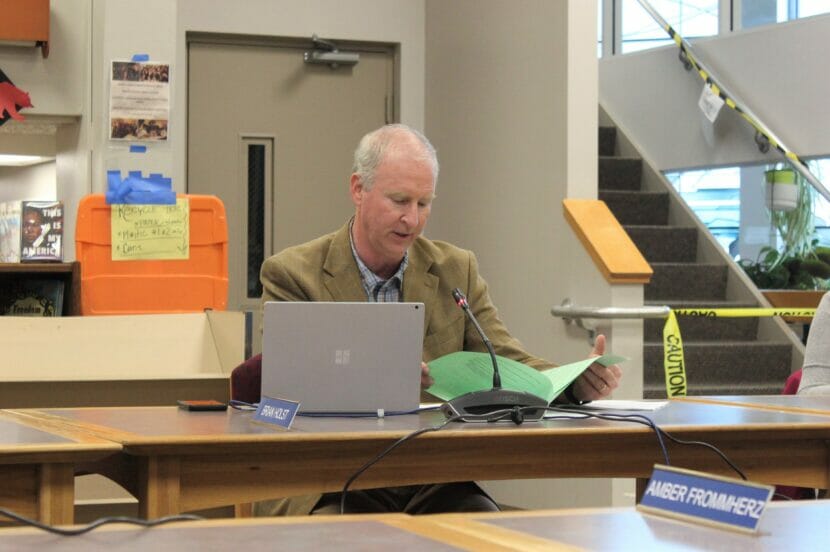
School Board member Brian Holst urged fellow board members to limit the early dismissal to elementary schools.
“I think it’s an important step in supporting the Alaska Reads Act that doesn’t go as far as changing the schedule for all of our students,” he said.
Juneau’s new Superintendent Frank Hauser said the new schedule won’t increase transportation costs, as long as all elementary grades participate.
“When we look at scheduling the buses to make sure it’s feasible and there is no additional cost, it has to be the whole school,” Hauser said.
Board members had also wanted to ensure kids could still attend RALLY, the district’s afterschool child care program, during the extra half hour of teacher work time. Administrative Services Director Cassee Olin said RALLY staff begin work at 11 a.m., so they’ll already be there when students get out early on Mondays. That also means parents won’t be charged for the additional half hour of child care.
Board member Elizabeth Siddon said the decision balanced teachers’ needs for time to meet Alaska Reads Act requirements with parents’ needs for childcare.
“I think that this solution is a much more targeted solution to the problem we were trying to address,” Siddon said. “My hope is that this is sort of a win-win-win for everyone.”
