
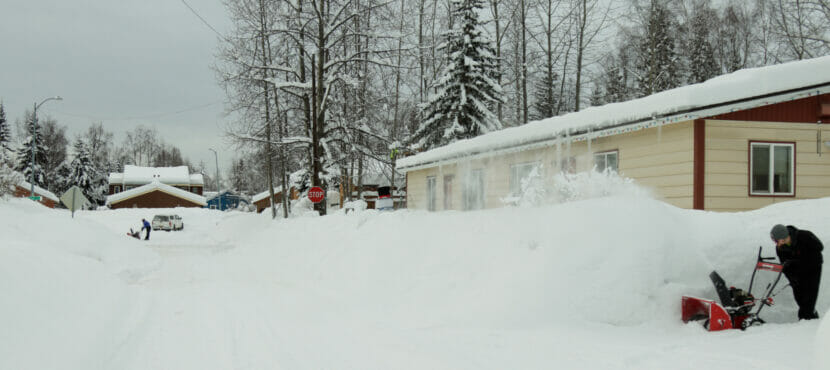
A winter storm dropped more than 14 inches of snow on Anchorage over the weekend, creating hazardous road conditions and closing public schools on Monday.
National Weather Service meteorologist Matthew Fazal said the bulk of the snow, almost 9 inches, fell between Sunday and Monday morning — and that’s just the snowfall recorded at the measuring post at the Ted Stevens Anchorage International Airport.
“If you’re going towards the Hillside, we’ve been getting reports of 16 to 18 inches of snow, and that may have been since sometime late Saturday,” Fazal said.
This weekend’s snowfall adds to a much snowier winter for Anchorage than normal.
To date this winter, Anchorage has seen roughly 71 inches of snow, almost double the average of about 37 inches. Fazal said, just this month, more than 23 inches of snow have fallen in Anchorage.
“The normal is six,” Fazal said. “So that gets us 17.5 inches above normal.”
Fazal said the snowfall should slow down the rest of the week.
“There doesn’t seem to be high accumulating snow, not like anything we received in the last few days,” Fazal said. “About less than half an inch. Some light snow looks to be coming into town tomorrow, and then should be done by tomorrow night.”
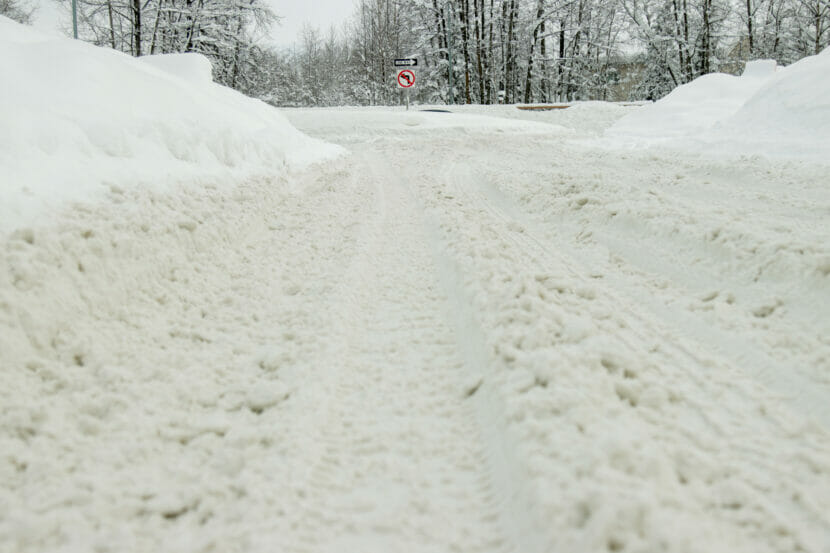
While the Anchorage School District closed school buildings and canceled after-school activities on Monday, class was still in session. The district declared a remote learning day.
This is the first remote learning day under the school district’s new snow day plan. The district announced last month that it was prepared to move students to remote learning for the next snow day, after a trio of winter storms closed schools for an unprecedented six days.
Those storms led to the snowiest December since the 1950s. While the heavy snowfall this winter is notable, Fazal said, it’s too soon to tell if Anchorage will break any winter records.
“For right now, it seems like we’re above normal,” Fazal said. “But it’s hard to track exactly where we’re going to be, even for this month, and ranking it compared to the last 30 years.”
In the meantime, Fazal said, the snowfall has come down on ice that’s already formed, and drivers should give themselves more time as they navigate the roads.
Alaska Public Media’s Tegan Hanlon contributed to this report.
