
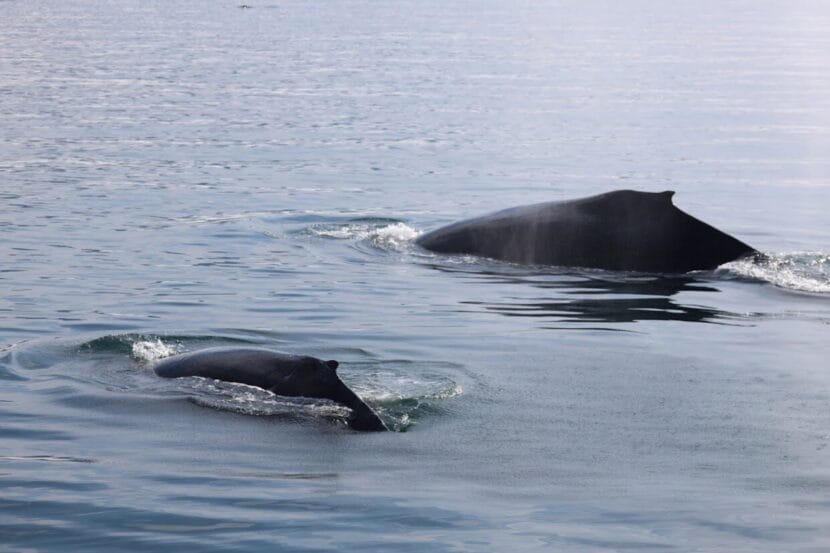
By some estimates, Juneau is the world’s largest and most lucrative whale watching port.
“We are about double the size of some of the other busy whale watching ports worldwide,” said Heidi Pearson, a professor of marine biology at the University of Alaska Southeast. “And it’s because of the cruise ship industry.”
Each year, hundreds of thousands of visitors — including at least 367,000 cruise ship passengers — take a boat tour hoping to catch a glimpse of a fin or a fluke of humpbacks that come to Juneau to feed every summer.
The resident whales are beloved by visitors and locals alike. Many are even known by name, but scientists say there’s a lot we don’t know about their health.
A research team led by Pearson and her collaborators at the National Oceanic and Atmospheric Administration and University of Alaska Fairbanks hopes to change that with a proposed whale monitoring project, which would be funded by money from cruise ship passengers.
Whales in Juneau face all kinds of health stressors, but overcrowding from cruise ships tourists may be one of them. There are at least 72 active whale watching tour boats operating out of Juneau, and the fleet has been growing steadily over the past three decades.
But the population of humpbacks remains relatively small. Pearson says there are usually fewer than a dozen feeding in the area at any given time. All those tour boats could stress them out.
“We know that in the presence of whale watching vessels, they travel more quickly. They have shorter dives, and they have a faster respiration rate,” Pearson said. “We know there’s behavioral impacts, but what we don’t know is, you know, are they just short term impacts? Does it have any effect on the physiology or health of the whale?”
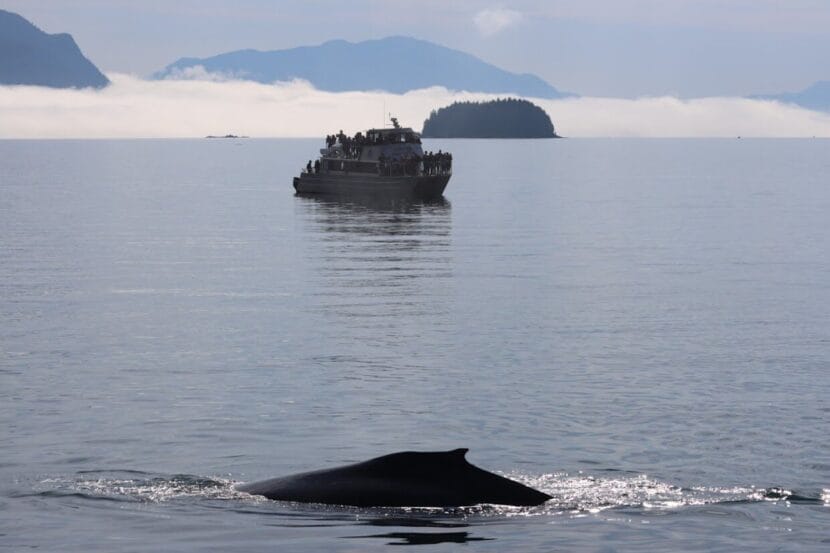
The proposed monitoring project will build on previous studies of whale stress and health, which took blubber samples from local whales to measure levels of the stress hormone cortisol. More long-term monitoring could shed some light on how whales are reacting to tourism pressure.
The project proposed budget is $160,000 to sustain regular blubber sampling and photographic surveys and to hire an additional researcher to analyze the data.
The funding would be generated by cruise ship passengers. The city of Juneau takes a $5 tax per person. But city Tourism Manager Alexandra Pierce said that money can’t be used for just anything.
“Passenger fee projects are pretty highly restricted,” Pierce said.
Back in 2016, the city was sued by Cruise Lines International Association Alaska, or CLIAA, the trade association for the cruise industry, for using passenger fees to construct the park that houses “Tahku,” Juneau’s iconic life-sized humpback whale sculpture.
The lawsuit was settled in 2019. But according to the settlement agreement, CLIAA has more of a say in how the city spends cruise passenger fees. Often, approved projects are concentrated in the downtown waterfront area.
The money can hypothetically be used for other things. But the cruise industry would have to approve it.
Pierce says that whale monitoring makes sense, because whale watching is one of the city’s most popular and lucrative tourist attractions, bringing in at least $60 million dollars annually. But she also says that Juneau’s whales are more than just money-makers.
“They hold a really important emotional place in the community,” Pierce said. “Both for visitors who were thrilled to be able to see them, and for residents who want to see them protected and not feel like they’re being harassed or bothered.”
In recent years, the health and happiness of the local whales has been the subject of public scrutiny. Some local whale watching companies have been looking for ways to minimize their potential disturbance to whales, but there’s not a lot of science to help them figure out the best way to do that.
With the monitoring project, researchers could learn more about disease, reproductive health, pregnancy, diet and other factors that affect whale’s health. Pearson says taking that holistic approach is important, because tourism is not the only stressor for Juneau’s whales.
Climate change threatens their food sources. Noise pollution can disrupt their communication. And entanglement in fishing gear or vessel strikes can injure or even kill them.
This summer for instance, the calf of one of Juneau’s most well-known resident whales died after he was hit by a boat.
“It’s hard to look at one factor in isolation because they all work together to impact a whale’s health,” Pearson said.
Juneau’s whale health monitoring project, along with all the other proposed passenger fee projects, will be up for public comment starting next week.